


Blog
Beef Cuts Explained: A Map of the Whole Animal
Beef Cuts Explained: A Map of the Whole Animal
Almost everything you need to know about a cut of beef follows from one question: did that muscle work hard, or did it barely move? Muscles along the spine do little and stay tender. Muscles in the shoulder and leg carry the animal, build connective tissue, and need time and moisture to become good. Learn the map and you stop needing to memorize cuts.
The eight primals
Chuck (shoulder)
Hard-working, heavily marbled, full of connective tissue. Great flavor, needs low and slow.
Cuts: chuck roast, chuck eye steak, flat iron, Denver steak, short ribs, ground chuck.
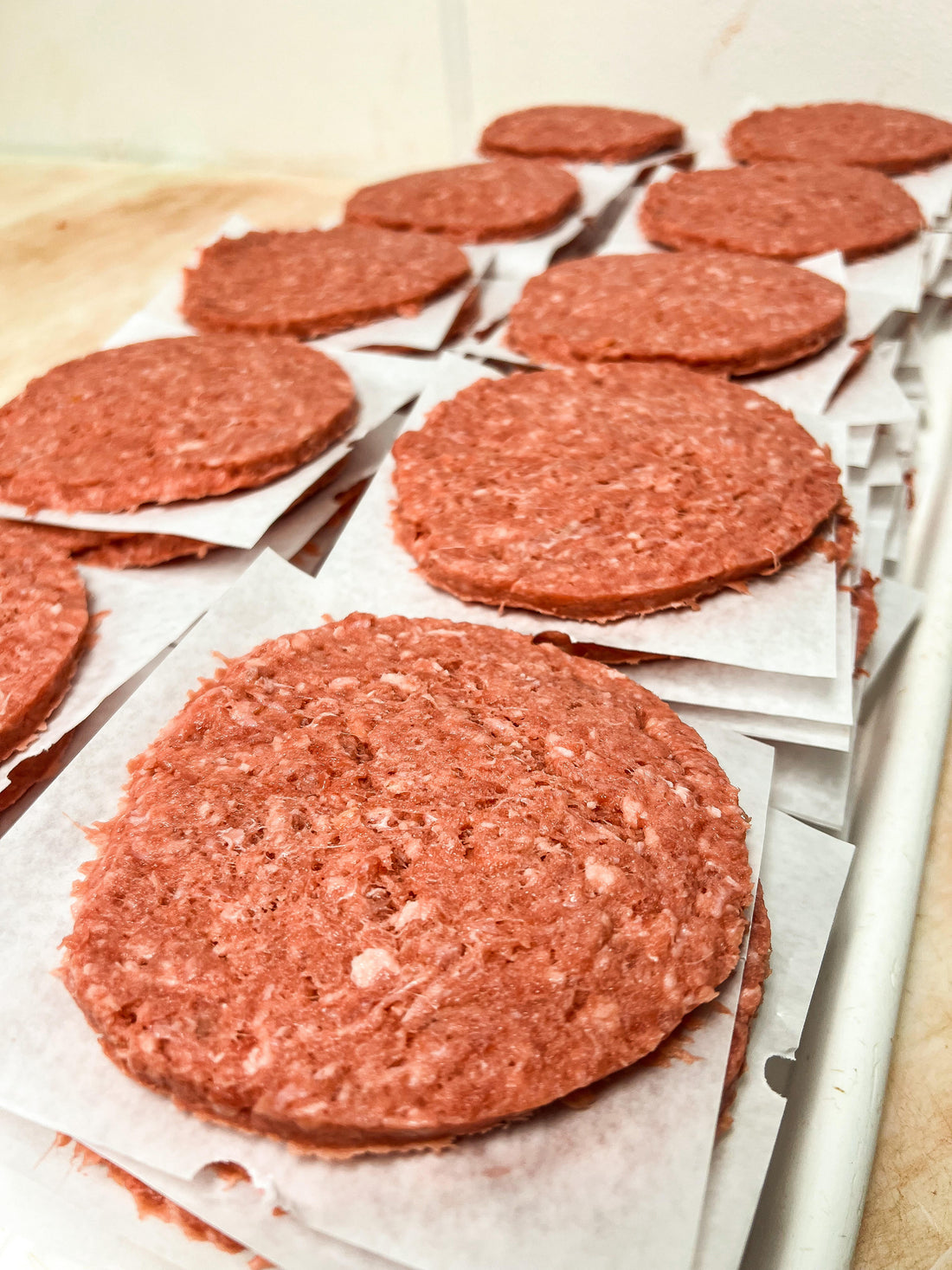
Worth knowing: the flat iron is the second-most-tender muscle on the entire animal and costs a fraction of a ribeye. The chuck eye sits directly against the rib primal and eats like a cheap ribeye — butchers call it the poor man's ribeye for good reason. Ground chuck at 80/20 is the best burger meat there is.
Rib
Barely used, heavily marbled, expensive for a reason.
Cuts: ribeye, bone-in ribeye, tomahawk, prime rib / standing rib roast, back ribs.
Worth knowing: a ribeye contains several muscles. The spinalis dorsi — the crescent cap around the outside — is the best bite on the animal, and some butchers sell it separately as ribeye cap. A tomahawk is a bone-in ribeye with the rib left long and frenched; you are paying steak prices for bone, but it does look magnificent.
Loin
The tenderest primal. Lean relative to the rib.
Cuts: filet mignon / tenderloin, New York strip, T-bone, porterhouse, top sirloin, tri-tip.
Worth knowing: a T-bone and a porterhouse are the same cut from different positions — a porterhouse is cut further back and has a much larger tenderloin section. Filet is the most tender and the least flavorful; strip is the better steak for most people. Tri-tip is a Central Coast California tradition that deserves more attention in Texas: cheap, beefy, superb grilled to medium rare and sliced against a grain that changes direction halfway through.
Round (rear leg)
Very lean, very hard-working. The value primal.
Cuts: top round, bottom round, eye of round, rump roast, sirloin tip.
Worth knowing: unforgiving cooked like a steak, excellent as roast beef sliced paper-thin, and the traditional cut for jerky and braciole. Eye of round cooked to a careful medium rare and sliced very thin is one of the cheapest good things you can put on a sandwich.
Brisket (chest)
Two muscles that support a standing animal with no collarbone. Enormous connective tissue, needs many hours.
Cuts: whole packer, flat, point.
Worth knowing: the flat is lean and uniform — what you slice. The point is fatty and marbled — what burnt ends come from. They cook at different rates, which is most of what makes brisket hard. See our brisket guide.
Plate and flank (belly)
Thin, coarse-grained, intensely beefy.
Cuts: skirt steak, hanger steak, flank steak, short ribs.
Worth knowing: outside skirt is better than inside skirt and is the correct cut for fajitas — more marbling, more flavor, and it is what Texas fajita tradition was built on. Hanger hangs off the diaphragm; there is exactly one per animal, which is why butchers historically kept it. All of these need to be cooked fast and sliced hard against the grain.
Shank and shin (legs)
The hardest-working muscle on the animal, wrapped around a marrow bone.
Cuts: osso buco, shank cross-cut, soup bones.
Worth knowing: nothing makes better broth. Hours of moist heat convert all that collagen into gelatin, which is what gives a stock body.
Offal and extras
Oxtail, cheeks, tongue, marrow bones, suet, liver, tallow.
Worth knowing: beef cheeks braise into something better than short rib for less money. Oxtail is no longer cheap because everyone figured it out. Suet rendered into tallow is the traditional frying fat and it is superb on potatoes.
Matching cut to method
| Method | Best cuts | Why |
|---|---|---|
| Hot and fast (grill, sear) | Ribeye, strip, filet, flat iron, tri-tip, sirloin | Little connective tissue — already tender |
| Fast + slice thin | Skirt, hanger, flank | Coarse grain, tough if cooked past medium |
| Low and slow (smoke) | Brisket, short ribs, chuck | Collagen needs hours to become gelatin |
| Braise | Chuck, shank, oxtail, cheeks | Moist heat and time |
| Roast | Prime rib, top round, sirloin tip | Large, even, sliceable |
| Grind | Chuck, brisket, short rib | Fat ratio and flavor |
The cuts worth asking for
If you want the most eating quality per dollar, ask us for: flat iron, chuck eye, tri-tip, picanha (the sirloin cap, and the best thing on a Brazilian grill), beef cheeks, and outside skirt. None of them are expensive. All of them are better than their price suggests.
Common questions
What is the most tender cut of beef?
Tenderloin, by a wide margin — it does almost no work. Flat iron is second.
What is the most flavorful cut?
Generally the hard-working ones: short rib, chuck, skirt, hanger. Ribeye is the exception — tender and full-flavored because of fat rather than work.
What does "against the grain" mean?
Muscle fibers run in a direction. Slicing perpendicular to them shortens each fiber, so your teeth do less work. On skirt and flank it is the difference between tender and chewy.
Can I ask a butcher to cut something custom?
Yes, and you should. Thickness, trim, a whole primal broken down your way, a roast tied — that is the job. Give us a day's notice for anything unusual.
Come look at the case
The fastest way to learn cuts is to stand in front of them and ask. Longhorn Meat Market, 11600 Menchaca Rd, Suite H, Austin, TX 78748 — (512) 280-6514. Or browse beef and steaks online with local delivery across greater Austin.