


Blog
Beef Grades Explained: Prime, Choice, Select and Wagyu
Beef Grades Explained: Prime, Choice, Select and Wagyu
Grade is the most visible thing on a package of beef and the least understood. Here is what the stamp actually means, and where it is worth your money.
What USDA grading measures
USDA quality grades measure two things: marbling — the flecks of intramuscular fat in the ribeye — and maturity, the animal's approximate age. That is it. Grading is voluntary, paid for by the packer, and assessed at a single spot: the ribeye face between the 12th and 13th rib.
Grade does not measure how the animal was raised, what it ate, whether it was given antibiotics, or how the beef was aged. Those are separate questions, and often more important ones.
- Prime — abundant marbling. Roughly 2–5% of graded beef. Most of it goes to restaurants.
- Choice — moderate marbling. The majority of what sells at retail. A wide band: high Choice is close to Prime, low Choice is closer to Select.
- Select — slight marbling. Leaner, less forgiving, noticeably drier on cuts that rely on fat.
- Standard and below — usually sold ungraded or turned into ground beef and processed products.
Where grade matters, and where it doesn't
Grade matters most on cuts cooked hot and fast, where intramuscular fat is the only thing keeping the meat moist:
- Worth paying up for: ribeye, strip, brisket flat, tri-tip, picanha, short ribs.
- Less important: chuck roast, shank, oxtail, anything braised for hours — collagen breaks down into gelatin regardless of grade, and does the work fat would otherwise do.
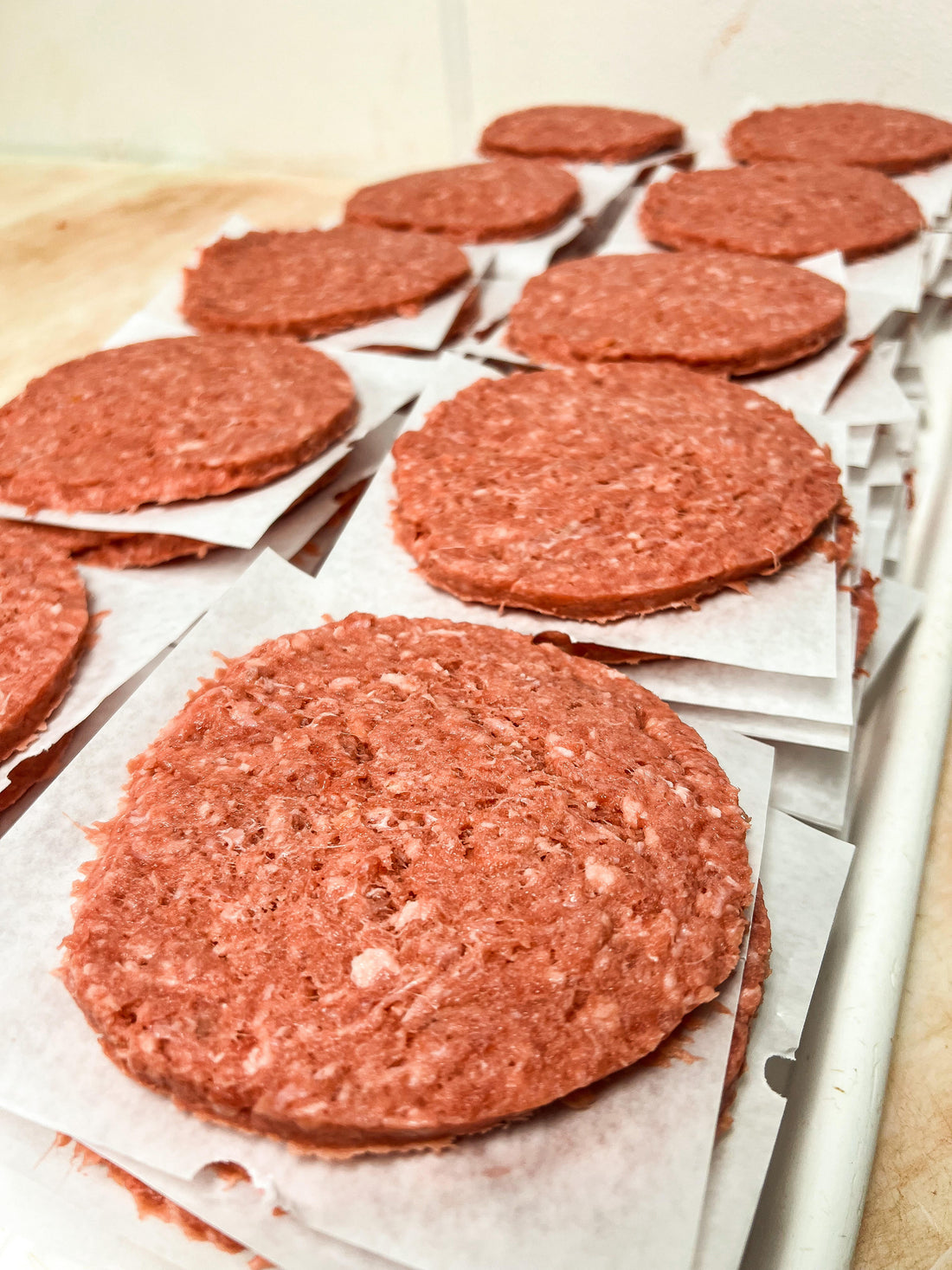
- Barely matters: ground beef. Fat ratio (80/20, 85/15) tells you far more than grade.
- Complicated: filet mignon. It is the most tender cut and the least marbled, so grade moves flavor more than texture.
If you buy one thing in Prime, make it a brisket. The flat is the part that goes dry, and extra marbling there is genuine insurance across a 14-hour cook.
American Wagyu
Wagyu means Japanese cattle breeds — principally Japanese Black. American Wagyu is almost always a crossbreed, usually Wagyu bred to Angus, raised on a long grain finish. It marbles well past what the USDA scale was built to describe, which is why you often see it sold on the Japanese BMS scale instead.
The result sits between excellent Prime and Japanese A5: richer and more buttery than Prime, still recognizably a steak you can eat a full portion of.
Japanese A5
Japan grades on two axes. The letter (A to C) is yield — how much usable meat came off the carcass — and has nothing to do with eating quality. The number (1 to 5) is quality, combining marbling, color, firmness and fat quality. A5 is the top of both.
Japanese A5 is a fundamentally different eating experience, not simply a better steak. The fat renders at a much lower temperature and coats your palate. A reasonable portion is two to four ounces, seared hard and sliced thin. People who order a 12-ounce A5 ribeye generally do not finish it.
Real A5 carries a 10-digit individual identification number traceable to the animal. If a seller cannot produce it, be skeptical.
Terms that are not grades
- Angus — a breed, not a grade. "Certified Angus Beef" is a brand program requiring upper Choice or better, so it does imply quality — but "Angus" alone on a package guarantees nothing.
- Grass-fed — a diet. Leaner, more mineral and more assertive in flavor, and it typically grades lower because grain finishing is what drives marbling. Lower grade here is not lower quality; it is a different product.
- Dry-aged — a process applied after grading, not a grade.
- Natural — nearly meaningless. It refers to processing, not to how the animal was raised.
Common questions
Is Prime always better than Choice?
On a ribeye or a brisket, usually yes. On a braise, rarely enough to notice. And high Choice from a butcher who knows the source often beats mediocre Prime from a case you cannot ask questions about.
Why is grocery store Prime cheaper than a butcher's Choice?
Grade is one variable among several. Age of the cut, how it was trimmed, how long it sat in vacuum packaging, and whether anyone dry-aged it all move price and quality independently of the stamp.
What grade is most beef in a supermarket?
Choice, and typically the lower end of Choice. Select is common at discount retailers.
Can I taste the difference?
Between Select and Prime on a ribeye, clearly. Between high Choice and low Prime, most people cannot in a blind test. Between Prime and A5, nobody has trouble.
Ask us what's in the case
We will tell you exactly what grade a cut is and where it came from. Longhorn Meat Market, 11600 Menchaca Rd, Suite H, Austin, TX 78748 — (512) 280-6514. Browse beef and steaks or local favorites online.